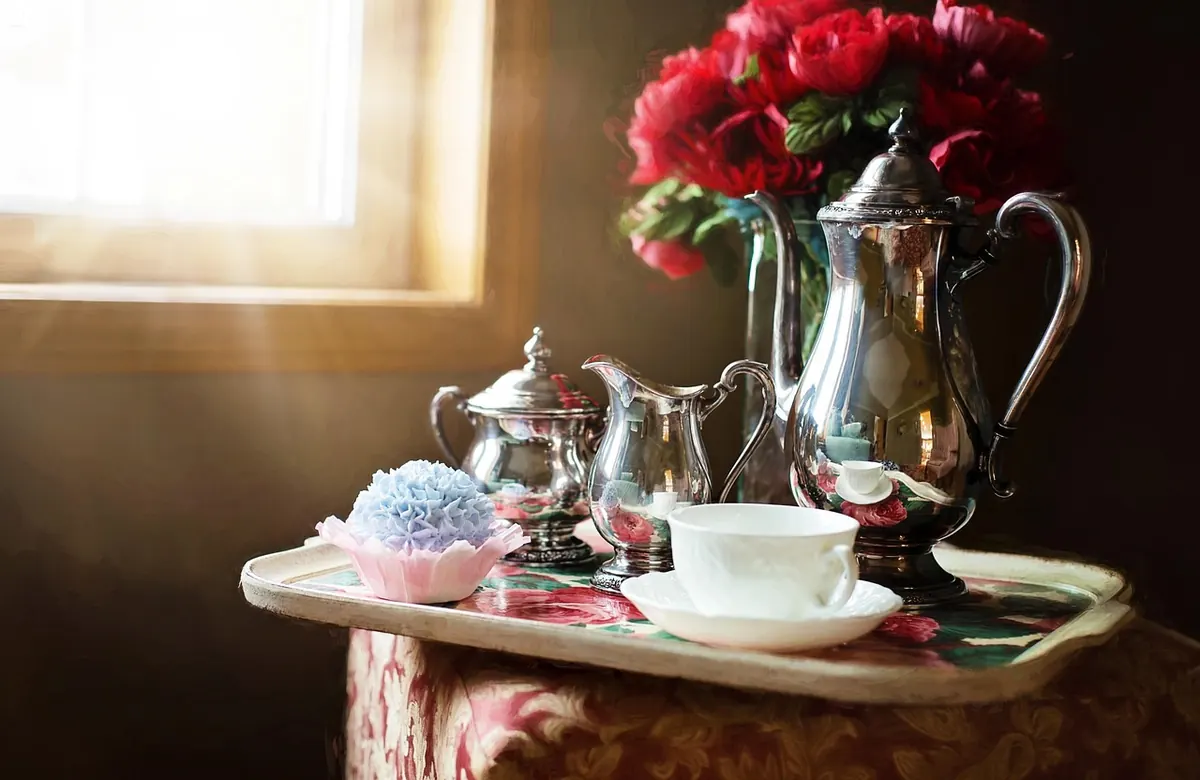
A teacup is one of the few antiques you can use every day without feeling you are ruining it. That is part of the appeal. The rest is variety: the handle shapes alone, from wide Victorian scrolls to neat Art Deco angles, could keep you occupied for years.
That variety becomes a problem, though. Walk into an antiques fair with no plan and you will come home with eleven mismatched cups, three cracked saucers and no memory of what you paid. A little structure at the start makes collecting more enjoyable and keeps your spending sensible. Here is the checklist worth working through before you buy your first cup in earnest.
The word gets used loosely. As a rough guide, antique means a hundred years or older, while vintage usually covers the earlier part of the twentieth century. Most teacup collectors end up working across both, from the Victorian period through to the 1960s and 1970s.
None of these is better than the others in absolute terms. A well-potted earthenware cup can be a far nicer object than a tired piece of bone china.
Handles are the quickest way in. Edwardian cups tend to be more restrained than Victorian ones; mid-century Scandinavian shapes can be almost geometric. Decoration is another route: hand-painted landscapes, transfer-printed patterns, gilded bands, raised enamel dots, or a lithophane base that reveals a hidden image when you hold it up to the light.
A focus does not have to be narrow. "English bone china trios made before 1930" is a focus. So is "cups with unusual handles" or "yellow-ground cups". The test is simple: can you explain your collection in one sentence? If you cannot, you will buy on impulse and duplicate what you already own. Keep one shelf of wildcards by all means, but let the rest have a reason.
Turn the cup over. The mark on the base usually gives you the maker, sometimes the pattern name or number, and occasionally a date code. The wording of country-of-origin lines changed over the decades, and potteries reissued popular patterns long after they were first designed. Marks have also been copied, and printed slightly differently across the life of a single factory.
Use the mark as a clue, not a verdict, and judge the cup as an object too. Is the potting even, with a thin, well-finished rim? Is the painting confident, or flat and obviously printed? Does the cup ring when you flick it, or clunk? A couple of reference books and a reputable collector database will teach you more than any phone app.
These checks take a minute at most, standing at the stall.
Care is part of the same discipline. Hand-wash in warm water with mild detergent, never a dishwasher, and avoid sudden temperature changes — pouring boiling water into a cold cup is how rims crack. Very old glazes and overglaze enamels are not always food-safe, so if you plan to drink from a piece and you are unsure, keep it for display or take advice from a specialist.
Start close to home. Charity shops, car boot sales and house clearance sales still turn up good cups, because most people clearing a house have no idea what is in the cabinet. Local auction houses sell boxed lots that often include one decent cup and five indifferent ones.
Antiques fairs and specialist dealers cost more, but you get to handle the piece, ask questions and learn. That education is worth paying for early on. Online, buy from sellers who photograph the base, the rim and the foot in daylight, and ask for more pictures if they have not. Sold prices, rather than asking prices, are the honest guide to what a pattern actually changes hands for.
Whatever the venue: set a budget before you go, carry cash, take a soft bag and
Photo: JillWellington / Pixabay

Most figure-painting problems start before the brush touches the model. Here are the priming, base coating and...

Turn pinecones, twigs and dried orange slices into tree ornaments, garlands and wreaths, with clear drying methods,...

Learn how to date antique maps by examining paper, printing methods, imprints, geographic clues, colour and...


Explore hobbies in the Cotswolds.
