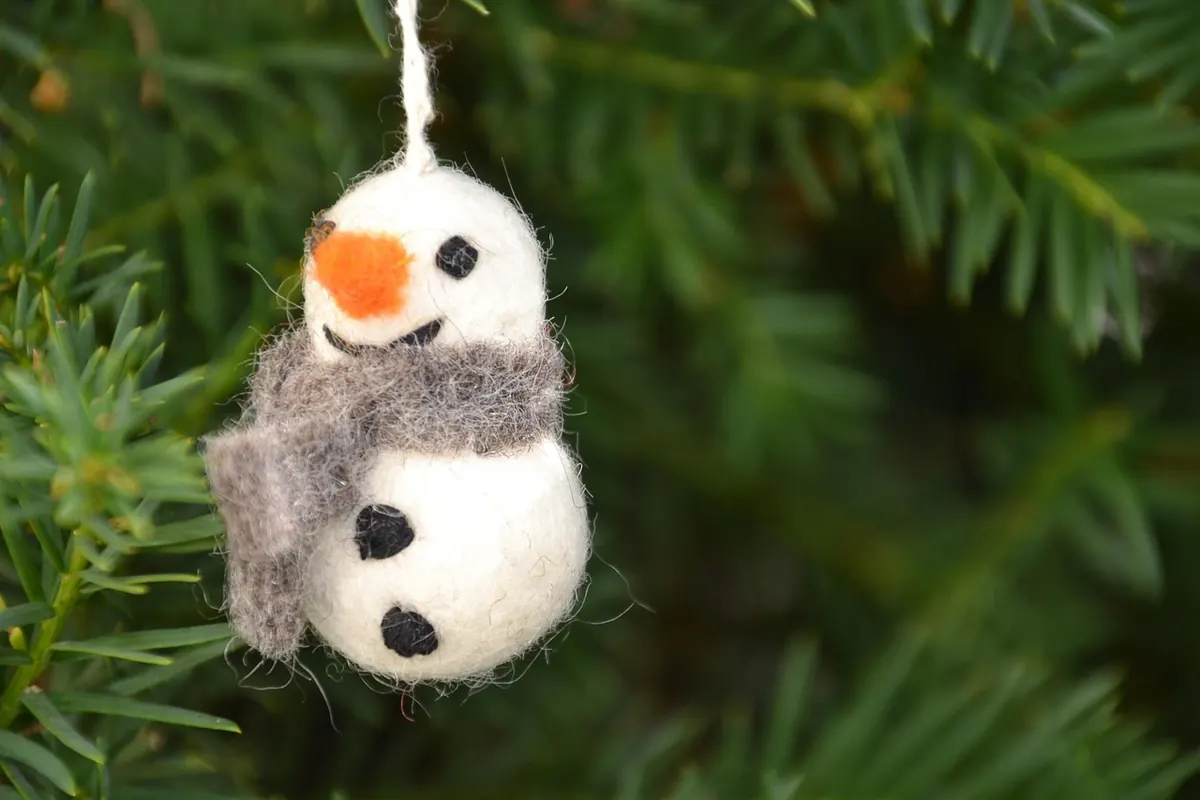
There is something quietly satisfying about a Christmas tree that smells of orange and pine rather than plastic. The materials are already outside: cones under the leylandii, a few bendy hazel twigs from the hedge, a net of oranges going soft in the fruit bowl. None of it costs much, and the results look handmade in the best sense — a little irregular, warm, and worth keeping for next year.
The best harvest happens on a dry afternoon in late autumn. Pinecones picked after rain stay shut and can go mouldy; leave them on a radiator for a week or wait for a drier day. Choose cones that are fully open and firm, without grey fuzz in the gaps.
For twigs, look for hazel, birch, willow or apple prunings — pieces about the thickness of a pencil that still bend without snapping. Take only fallen wood or trimmings, never cut from a living tree without permission, and leave plenty behind for wildlife. Parks and nature reserves usually have their own rules, so it is worth checking before you fill a bag.
Oranges, lemons, apples and clementines all dry well. Early-season fruit slices more cleanly than a soft, over-ripe one. Cinnamon sticks, star anise, bay leaves and rosemary sprigs round out the palette and keep for years in a jar.
Dried citrus is the workhorse of natural decorating. Do it properly and the slices hold their colour and scent for years; rush it and they turn brown or grow a fur coat in storage.
Store finished slices in a paper bag or an open box rather than a sealed tub, so any remaining moisture can escape. If one goes soft or spotty, throw it out instead of adding it to the box.
A knot of jute twine around the base of a cone and a loop at the top is a decoration in under a minute. For something fuller, bind a small cone to a cinnamon stick, tuck a bay leaf behind and finish with a bow.
Cut garden twine about a metre longer than you need. Tie a small loop knot around each cone so it can slide along the string, and space them out with cinnamon sticks at intervals. Sliding knots mean you can rearrange the spacing once it is hung, which is far easier than getting it right on the floor.
Start with a willow or rattan hoop, bought or twisted from soaked willow. Fix cones with florist wire wrapped around the base and twisted at the back — hot glue alone will let go in a cold porch. Work in pairs pointing outward for a fuller ring, add dried orange slices in the gaps, and finish with a wide ribbon.
Five straight twigs of roughly equal length make a star. Lay them in a five-pointed shape, overlapping the ends, and bind each joint with twine in a criss-cross, finishing with a reef knot and a drop of glue. Small ones, no bigger than your hand, hang well on a tree. A big one, half a metre across, works above a door or on a plain wall, especially with a few dried slices wired on.
For something even simpler, tie a bundle of birch or hazel twigs with ribbon and stand it in a tall jar — useful in a hallway where a full tree would be in the way.
Use a darning needle and fine twine for a dried fruit garland, going through the top edge of each slice about 5mm in, where the rind is firm. Alternate slices with cinnamon sticks, wooden beads, bay leaves and the occasional drilled pinecone. Keep the finished garland indoors; outside, birds and damp make short work of it.
For a table centre, fill a shallow bowl with cones, a handful of dried slices, a few star anise and two or three hazel twigs. Tuck in a candle if you like, but keep the flame well clear of dried fruit and twigs — they are tinder. A rosemary sprig and one orange slice tied with twine make a quick napkin band guests can take home.
Natural decorations last for years if they stay dry. Wrap fragile pieces in tissue, pack them in a cardboard box with a few silica sachets, and keep the box somewhere cool rather than in a damp loft. Orange slices fade in direct sunlight, so store them away from a window. Snip the twine when you unpack, rearrange, and tie it again — one box of cones and dried fruit can dress a tree, a mantel and a table, and cost you nothing but an afternoon.
Photo: Innviertlerin / Pixabay

Most figure-painting problems start before the brush touches the model. Here are the priming, base coating and...

Learn how to date antique maps by examining paper, printing methods, imprints, geographic clues, colour and...
A practical guide to garden macro photography with basic gear — finding subjects, holding focus, shaping light and...

Explore hobbies in the Cotswolds.
