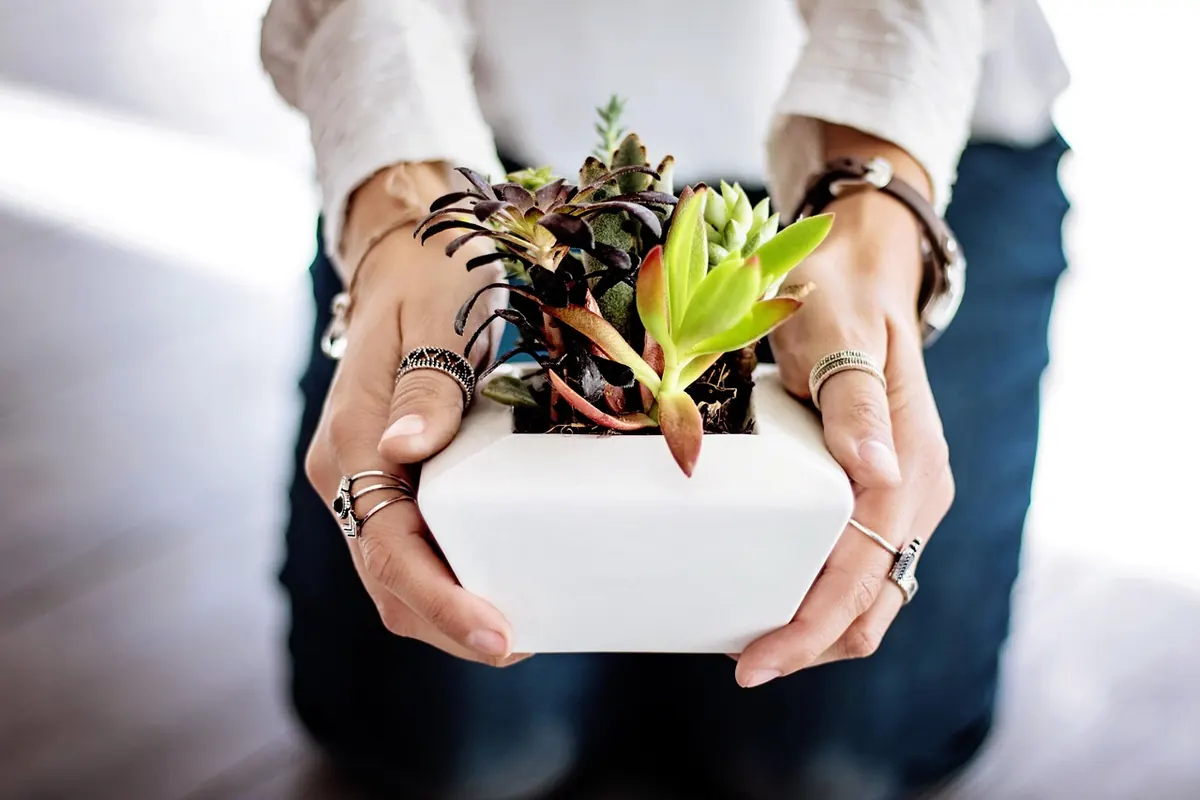
The Cotswolds sit on limestone, and that thin, pale, free-draining soil over rock suits a particular cast of plants: cowslips, ox-eye daisies, harebells, wild marjoram, salad burnet. You don't need a meadow to grow them. A few generous pots against a sunny wall, on a balcony or in a paved yard will do the job, provided you get the compost right and work with the seasons rather than against them. Wildflowers are not delicate. They are adapted to poor, hungry ground, and they sulk when we pamper them.
What follows is roughly how the year unfolds in containers, from sowing to seed collecting.
Most failures with potted wildflowers come down to compost, not care. Bagged multipurpose is too rich and holds too much water. A loam-based compost such as John Innes No. 2, cut with about a quarter to a third by volume of horticultural grit or sharp sand, gives you something much closer to the thin, stony turf these plants evolved in.
Pot size matters more than most people expect. A cowslip in a 15cm pot will flower once and then struggle; the same plant in a 30cm terracotta pot will bulk up and seed around. For deep-rooted species like field scabious or meadow cranesbill, go deeper still. Add crocks or a layer of grit at the base, stand pots on feet, and top-dress the surface with grit to stop rain splashing soil onto the leaves and to make life harder for slugs.
What these plants actually want:
Many native wildflower seeds will not germinate until they have been through a spell of cold and damp. If you sow in late winter, either leave the trays outdoors in a sheltered spot or give them six weeks in the fridge: seal the seed in a bag with a little barely damp sand or vermiculite and put it in the salad drawer. Cowslip, primrose, harebell and meadow cranesbill all respond to this treatment.
Sow thinly on the surface of your gritty mix. Several of these species need light to germinate, so barely cover the seed with a dusting of grit. Label everything, because germination is slow and uneven — some seeds will appear in three weeks, others in three months. Buy seed from a reputable native supplier, or collect your own. Never lift plants from the wild; the verge colonies you admire took years to establish.
Prick seedlings out into individual 9cm pots once they have their first true leaves, handling them by a leaf rather than the stem. Move them on into their final containers as roots fill the pot, and harden off anything raised under cover before it goes outside.
From April onwards, slugs and snails are the main threat to young plants. Copper tape around the rim of a pot helps until it tarnishes. Grit mulch helps until it gets damp. The most reliable method is a torch and a walk round the pots after dark, which takes five minutes and removes most of the problem. Beer traps work, nematode drenches work, and if you have pets or hedgehogs in the garden it is worth avoiding metaldehyde pellets altogether.
Aphids will find scabious and knapweed in early summer. A jet of water or a careful squish is usually enough.
Water thoroughly in dry spells, ideally in the evening, and let the top centimetre or two of compost dry between waterings. Little and often encourages weak roots. A pot that has completely dried out may need to be dunked in a bucket until air bubbles stop rising.
Deadhead some plants to keep flowers coming, and leave others to set seed. Meadow cranesbill and ox-eye daisy will often give a second, smaller flush if you cut them back hard after the first. Let seed heads stand for the birds, and check pots for vine weevil grubs if leaves start to notch at the edges. Resist feeding: rich compost produces soft, floppy growth and few flowers.
Collect seed on a dry day, once the heads are brown and rattling, and tip it into paper bags or envelopes rather than plastic. Most native seed germinates best sown fresh, so scatter some straight away on grit-topped pots and leave them outside for the winter. Store the rest somewhere cool and dry.
Early autumn is also the time to divide crowded perennials — cowslip, wild marjoram, salad burnet — and to top-dress pots with fresh gritty compost. Lift each pot onto feet before the wet weather sets in, and move anything that dislikes winter wetness against a wall.
Almost everything is dormant now. Tidy lightly but not ruthlessly: hollow stems and seed heads shelter overwintering insects, and the shape of them is half the reason to grow these plants. The real job in December is checking that pots are not sitting in water, and planning. Note which pots still had flowers in the quiet weeks of July, and order seed to fill the gaps.
Yellow rattle is the classic meadow maker, but it is a parasite on grass roots and needs a host to survive. In a large planter sown with a fine fescue it can work for a season or two, though it often exhausts its host. Treat it as an experiment rather than a staple.
Fewer, bigger pots beat a crowded shelf of small ones every time. Group containers together so they shade each other's roots, and put the thirstiest plants where you will actually see them and water them. If a plant sulks, move it somewhere sunnier or repot it into grittier compost — feeding is almost never the answer.
Expect variation. Some springs will be cold and late, some summers will scorch the flowers off in a fortnight. Native plants are forgiving of that, and a pot of cowslips in March, followed by marjoram buzzing with bees in August, is a good return for very little work.
Photo: DomPixabay / Pixabay

Most figure-painting problems start before the brush touches the model. Here are the priming, base coating and...
Turn pinecones, twigs and dried orange slices into tree ornaments, garlands and wreaths, with clear drying methods,...

Learn how to date antique maps by examining paper, printing methods, imprints, geographic clues, colour and...

Explore hobbies in the Cotswolds.
