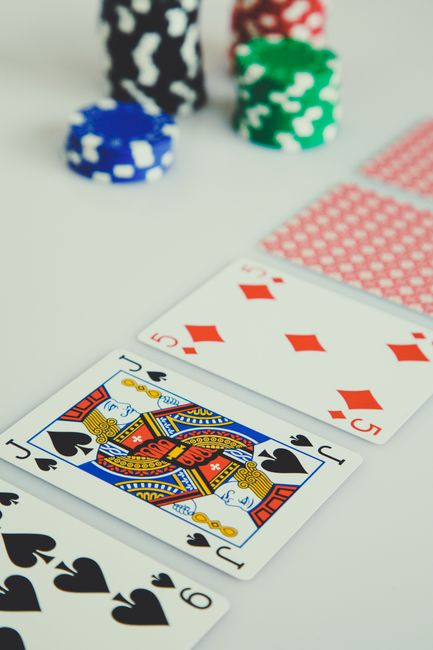
Ask ten casino players why slots are profitable for the casino and you'll get ten versions of the same answer: "the machine is rigged." That's not quite right, and the truth is far more interesting. Slot machines don't need to cheat to make money — they're built on a mathematical framework that practically guarantees it. Understanding that framework won't turn you into a millionaire, but it will change how you look at every spin, every bet slip, and every poker table you sit at.
Every casino game carries what's called a house edge — a built-in percentage advantage the casino holds on average over millions of bets. It's not a hidden trick. It's math.
Here's a concrete example. European roulette has a single zero on a 37-number wheel. If you bet $10 on red, you win roughly 48.6% of the time and get paid even money. The casino's expected profit per $10 bet works out to about 27 cents. That 2.7% edge is the casino's payday — not on one spin, but on hundreds of thousands of them. Many readers start with slot depo 5k when comparing options.
Now compare that to the slots. Depending on jurisdiction and machine type, slot return-to-player (RTP) percentages often sit between 92% and 97%. That means the house edge on slots can range from 3% to 8% — three times the roulette edge in some cases. A player who dumps fast-spinning $1 slot spins every few seconds is churning through hundreds of dollars per hour, and the casino's 5% slice of that adds up fast.
The lesson is simple: it's not about whether you'll win a session. It's about what fraction of every dollar you push through the machine you're likely to keep.
RTP is the average return over an enormous sample. Volatility, sometimes called variance, is how wildly results swing along the way. Both matter equally for how a game feels to play.
A 96% RTP slot with low volatility will give you lots of small wins and slow bleed. A 96% RTP slot with brutal volatility might swallow your bankroll in ten minutes and cough up a massive win once in a blue moon. Same average return, wildly different sessions. This is why two players can play identical RTP games and walk away with totally different stories.
Here's a quick mental math trick for slots. If a game has 96% RTP, you can expect to lose about 4% of your total wagered on average. So if you cycle $500 through a slot at $1 per spin, expect to lose roughly $20 in expectation — though in practice it could be $400 down or $2,000 up depending on volatility. The longer you play, the closer you'll drift toward that mathematical expectation.
Poker sits in a strange position because it's the one mainstream casino game where the house doesn't bet against you. Instead, the casino takes a rake — a percentage cut of each pot, typically 5% to 10%, often capped at a few dollars.
That detail is enormous. In poker, your money is won and lost from other players, not the house. A skilled player who consistently beats their table can profit over time, even after the rake. That's simply not possible on slots or roulette in any sustainable way.
But most players never put in the study hours. Poker rewards discipline: bankroll management, range analysis, understanding position, and controlling tilt. A $1,200 bankroll commonly translates to $0.50/$1 stakes for casual players, and even disciplined grinders go through 20+ buy-in downswings. So yes, poker is beatable — just not accidentally.
The math is only half the story. The other half is human behavior, and slot designers and casino floor managers understand it better than any neuroscientist.
None of this is illegal. The machines still deliver their advertised RTP. But the delivery method is optimized to keep players spinning long enough for the edge to work its cumulative magic.
Sports betting operates on a similar principle. Bookmakers price markets with an overround — the built-in margin that ensures they profit if action is balanced. A standard two-way market like a football match often has an implied probability slightly above 100%. For example, priced at decimal 1.91 for both sides, the implied probabilities add to about 104.7%, meaning a 4.7% margin for the book.
Spread betting, parlays, and exotic props on betting sites usually carry bigger margins than straight moneylines. That's why a sharp bettor favors oversized markets with tight margins and low-vig punting. It's also why profitable sports bettors track closing line value, not just win/loss records: over hundreds of bets, beating the closing line is the clearest signal of skill.
This isn't a lecture about quitting gambling. Most readers here are adults spending entertainment money, and that's fine. But knowledge is leverage. Here are the moves that matter.
The casino never needs to cheat you. It wins with arithmetic, patience, and a tiny edge applied relentlessly over an enormous volume of bets. The moment that clicks, the games stop looking like puzzles waiting to be cracked and start looking like what they are: entertainment with a predictable tax. The players who stick around longest and enjoy themselves most are the ones who price that tax in advance, treat the session like a night out, and let the odds math run its slow, quiet course in the background. Walk in knowing what you're paying for, and the whole experience shifts from being played to playing on your own terms.

Most figure-painting problems start before the brush touches the model. Here are the priming, base coating and...

Turn pinecones, twigs and dried orange slices into tree ornaments, garlands and wreaths, with clear drying methods,...

Learn how to date antique maps by examining paper, printing methods, imprints, geographic clues, colour and...

Explore hobbies in the Cotswolds.
